For research and documentation leading to a sound and oral history archive on the fakirs of Bengal and an ethno-musicological travelogue in Bengali focusing on the life of the fakirs and their music. The project is expected to contribute to the study of oral cultures and popular religion, and generate a critical discourse on the radical syncretism practiced by a minority community.
For the innovative dissemination of an archive of recordings, photographs, footage and books relating to biraha (songs of separation). Ten musical camps will be organised in rural West Bengal, Assam and Bangladesh, apart from presentations/performances in cities. The camps will give different communities of musicians wider exposure to the songs from their region as well as similar and related songs from other regions.
For experimentation in new media like glass, plastic, acrylic and stainless steel. The importance of space, weight and colour in the making of sculpture will be explored, as well the sculptural possibilities in specific media, like widely available, pre-processed plastic forms. Training in kiln-casting glass as well as by using Computer Numerical Control (CNC) technology and sophisticated computer software to create sculptures will be shared with students and peers through demonstrations and workshops.
For the production and broadcast of thirteen episodes of a radio programme on Carnatic music for middle school children across Karnataka, and publication and dissemination of printed support material. The programme will cover the basic concepts of Carnatic music such as raga, tala and composition, various composers, musical instruments and the concert format. The series will be broadcast through all primary channels of All India Radio, Karnataka
For an educational and child-centred intervention in an annual Ramlila in Varanasi with the objective of revitalising the traditional theatre form within a contemporary context and helping it to become an annual learning activity for children.
For the development of production based on the Ramayana, exploring digital animation and puppetry in performance. Keeping Bhavabhuti’s Ramayana as the main source, this adaptation will reinterpret the love story of Ram and Sita as a tragic one and explore the duality in Ram’s character. A puppet theatre director and a media artist will work with traditional shadow-puppeteers, a contemporary musician, a writer and three contemporary puppeteers to create the production.
For the development and staging of three theatre performances that draw on accessible images and texts relating to the history of Naxalite movement. The performances will be seen mainly via live video in an effort to replicate our fragmentary understanding of this movement. Each of the three pieces will be performed on ten occasions and audience responses will be incorporated into subsequent performances.
For the recording, archiving and transmission of the repertoire of master musicians of the Manganiar tradition of Rajasthan.The new recordings will be held at two locations and made easily available to the musicians, while training camps for Manganiar children and young musicians will feed the repertoire back to the community.
For research and writing that explores the relationship between the language of contemporary Bengali poetry (1990-2007) and the emergence of a new, urban middle class. The project will engage with the role of television, the Internet and mobile phones, among other things, in transforming the notion of a poetic language. It will lead to a series of essays that is expected to introduce new ways of reading and new tools of analysis into literary studies in Bengali.
For reinvigoration of the sufiyana kalam of the mirs of Pugal, Rajasthan. A group of young musicians will be strengthened, the musical repertoire consolidated and performance opportunities created to address the issue of livelihood for the young Sufi performers. A trust will also be set up, run by members of the community, music scholars and enthusiasts, who will take ownership for the initiative.
For preparatory research towards a novel about the caste wars waged by the Nadar community in Tirunelveli and Madurai districts in Tamil Nadu during the 19th and 20th centuries. Based on an examination of archived police, court and other documents of the colonial administration, the novel will transform factual history into an emotionally ‘true’ portrait of these turbulent times in the life of the Nadar community, which in turn fed into the larger Indian struggle for independence.
For research towards a novel on the rise and fall of Carnatic music as a dynamic social form from the mid-1920s to the end of the 1960s. The researcher will consult archival material on the lives of Carnatic musicians and the technical innovations made within the music during this period; interview performers and critics who were associated with this phase of the music; and consult scholars working on Carnatic music. The project will also lead to English translations of selected memoirs written by Carnatic musicians, which will be useful for the novel but can also be more widely disseminated.
For research towards two novels––in Bengali and English––on the journey of a refugee colony to urbanity in post-partition Calcutta. Envisaged as a border-crossing genre, the proposed novels will explore the interface between ethnography, history, memoir and fiction. Dwelling on the texture of the ordinary and familial history to construct an archive of pain, anguish and hope, the novels are expected to challenge nostalgic accounts of the afterlife of the Bengal partition.
For the production of Bishar Blues, a film on the fakirs of Bengal, examining their music and their deeply spiritual everyday life as a living practice of radical syncretism. Bishar, the deviant branch of Islam practised largely by the lower castes, does not sacralise the Shariat, and its history in Bengal is replete with the assimilation of Buddhist, Tantric and Vaishnavite traditions and practices. In a context where Islam is increasingly under attack from different quarters, the film seeks to open up a crucial debate on secularism.
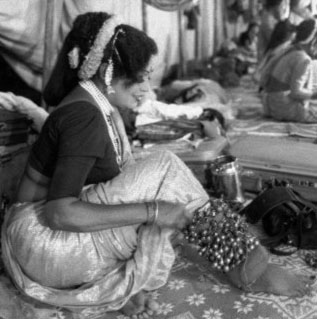
For the editing, designing and printing of Tamasha: Ek Rangadi Gamat, a book in Marathi on the Tamasha folk theatre form. The book––one of the outcomes of an IFA-supported documentation project––will contain about 250 photographs accompanied by text that describes the different forms of Tamasha prevalent in Maharashtra as well as the lifestyles of its performers.