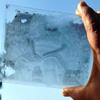
For the second phase of an Alternative Photography project that captures the socio-economic changes in Daniya village of Almora through dry plate Collodion photography. The photographs produced through this experimental process will be published as limited edition handmade albums, a coffee table book of scanned original photographs for wider circulation, a process documentation booklet and DVD.
For facilitating a series of visual arts appreciation workshops for all the students of a school (Classes Eight, Nine and Ten). He will collaborate with a visual arts college and local artists to design and execute the grant.
For a series of workshops with teachers from a school, which are expected to sensitise them to theatre education and expose them to the process adopted by the grantee as she works with them to realise a school production. Following the workshop, a smaller group of interested teachers will adapt a school text and co-direct plays in the school. The final productions will be shared with the school community.
For an exploration into the ethos of local Jatres (traditional fairs) with students, peers and teachers in the region. These grants will enable teachers to re-introduce students to the idea of Jatres as a storehouse of living traditions and help students contextualize this in terms of what they have learnt through their school texts. The students will document and also re-construct a Jatre within the school to celebrate with the village community.
This Grant was Terminated by IFA and the Grantee is ineligible to apply to IFA in the future.
For research towards production and dissemination across six tier B cities of a performance piece, tentatively titled Notes on Chai. The performance will explore the idea of the quotidian in everyday life, by combining realistic character-based pieces with abstract sounds.
For the production of a series of films and the curation of workshops and screenings through which a group of ten to fifteen young filmmakers will be trained to create site-specific moving image content. The objective is to generate audio-visual imagery that explores the cinematic form and engages the cultural, political and historical context of Assam from a location grounded within the region, dispelling the prevalent myth of the Northeast as peripheral within a national context.
For research towards a curatorial project exploring the history of early sound and sound technology through archival research and interviews, as well as artistic collaborations between the researcher and a Bombay-based curator, artists, sound recordists, sound theorists, musicians, linguists, researchers and writers whose practices contribute to an understanding of sound ecologies in India.
For the creation of a publication, two workshops and a public exhibition to be held in Delhi in January-February 2014 to demonstrate imaginative ways of re-thinking the question of cultural infrastructure. The New Models on Common Grounds project that is part of the Raqs Media Collective’s work as Artist Directors of INSERT 2014 will invite speculations from 30 artists to respond to particular sites symbolic of the cultural life of Delhi.
For the third edition of a four-month residency programme, which will enable four Indian photographers from diverse cultural backgrounds to explore and experiment with different approaches to the photographic medium. This edition will introduce a spot for a writer-in-residence to help initiate the practice of photography writing in India.
For the creation of curatorial work in collaboration with the Education and Conservation Departments at Chhatrapati Shivaji Maharaj Vastu Sangrahalaya (CSMVS), Mumbai towards one or more exhibits drawing upon the museum's existing collections, which will travel around Maharashtra in a specially designed bus.
For the empowerment of students from a government school in the village of Gudadoor in Koppal District, Karnataka, to creatively link their process of learning in the classroom with the local folk-art traditions that they are immersed in. This approach to classroom pedagogy seeks to combat the corrosive influence of popular culture on the ethos of the school.
For students from a government school in the village of Mantagi in Haveri district, to engage in a process of exploring a text from the school syllabus by interpreting it through local art forms.
For students from a government school in the village of Gumballi in Chamarajanagara district to engage in the rich tradition of folk art forms that celebrate the lush natural habitat of Chamarajanagara district, where the school is located, thereby addressing the environmental concerns of the region.
For a government teacher from the village of Managundi in Dharwad district to address the gap between high and low performing students in her classroom using the arts.